


Texas’ mid-decade redistricting redraws significant parts of DFW’s current congressional districts, potentially flipping a seat from Democrat to Republican in one of the districts near UTD.
The effort to redistrict the state began during the summer as part of Gov. Greg Abbott’s special legislative session agenda. Amid consistent criticism, such as unanimous disapproval of the redistricting plans by attendees at a UT Arlington hearing and Democratic representatives leaving the state to prevent quorum, the issue is among Texas’ most controversial and nationally watched issues this year.
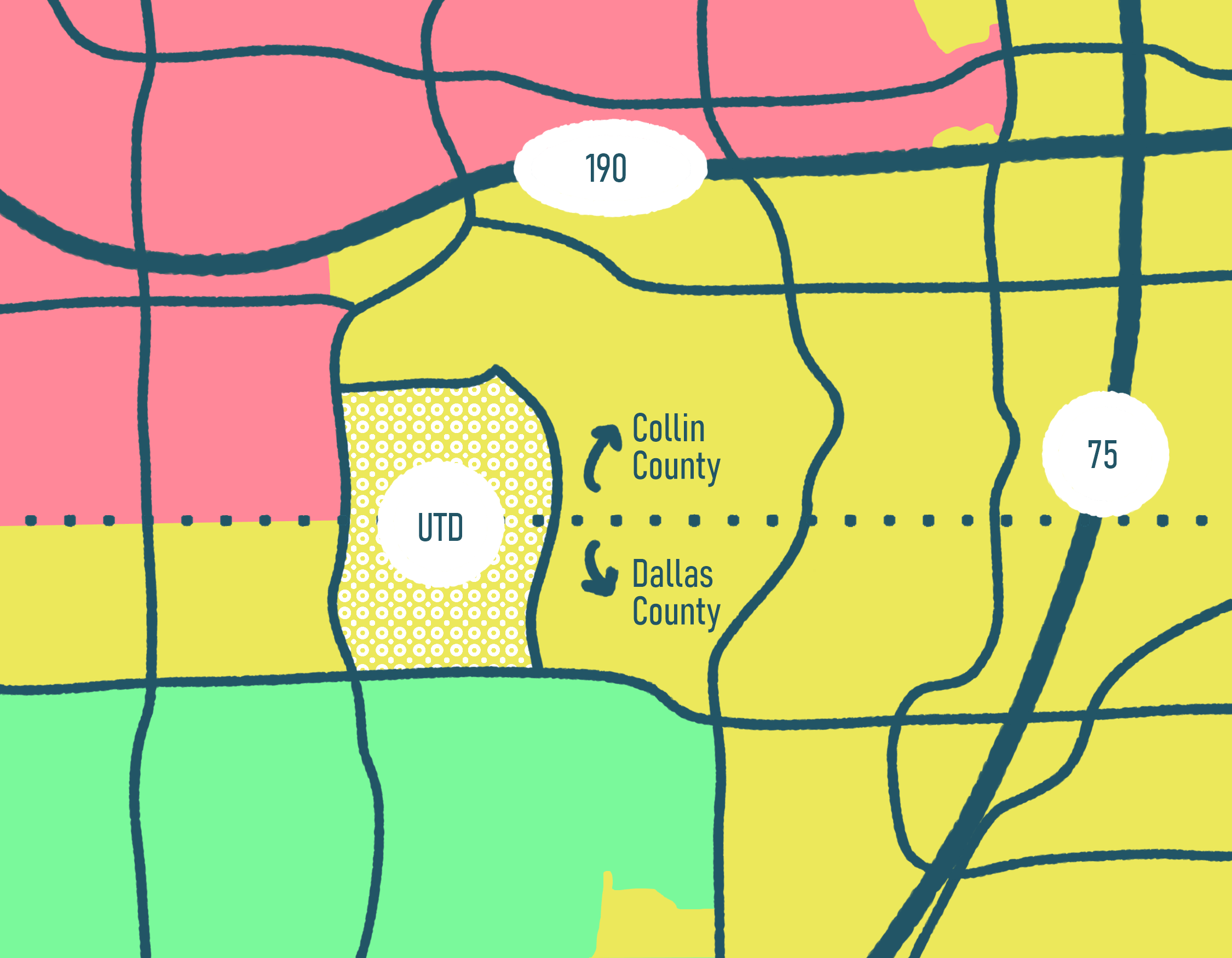
Texas’ districts are currently drawn according to the PLANS2193 map. According to this map, UTD is entirely within Congressional District 32. District 4 is found immediately to the west by crossing Waterview Road and District 24 is found just south of Campell Road. District 32 is Democratic seat under Julie Johnson, District 4 is a Republican seat currently held by Pat Fallon and District 24 is also Republican under Beth Van Duyne.
The Texas legislature passed SB 4 which outlines redistricting plan PLANC2308 on Aug. 22. The new plan has the potential to create five new Republican seats and change the boundaries and demographics of all three districts around campus. UTD would remain next to districts 4 and 32, but District 4’s Anglo population would decrease from 59.5% to 57.4% which amounts to over 60% of its voting population thus cementing District 4 as a stronger Republican district than before. District 32 would turn from a Democratic district to a district that favored Republicans because of its major demographic shifts which took it from a 68% non-white district to a district which is classified as 49.2% Anglo, a 17 point increase. Demographic data was collected by the Texas Tribune. And District 24’s boundary would no longer start at Campbell Road or border UTD. District 24 would remain a district that leaned towards Republicans.

At UTD, one political student organization is speaking out against the changes. Political science and psychology junior Sara Hayes is president of Texas Rising, a political organization focusing on civic engagement and progressive policy. As of publication, Texas Rising is the only political student organization on campus to stage events related to redistricting. Hayes said the proposed changes amount to racial gerrymandering and voter suppression.
“It’s very clear that the political motivations for this come from the White House,” Hayes said. “They come from the Trump administration trying to secure even stronger majorities in the states they want in order to secure the future of their party, and they’re doing so in a way that dilutes the vote of specific types of typically marginalized voters.”


Texas is no stranger to controversial redistricting. Since the Voting Rights Act of 1965 was passed, Texas has been challenged on the legality of its district maps every single decade. The challenge to the 2010 maps has not been resolved in court. Thomas Saenz, president and general counsel for the Mexican American Legal Defense and Educational Fund, told the Tribune that when legislators first presented new district maps for the current redistricting efforts, they claimed they were in accordance with the law. Now, some map proposals have been discarded for being “discriminatory against white people.” MALDEF is part of the ongoing legal challenge to Texas’ redistricting efforts.
“They contended that what they drew was completely satisfactory, so now that they are acquiescing in some concocted allegation of illegality from the Trump administration is astounding,” Saenz said.
According to Hayes, students should make their discontent known through publicly protesting the redistricting efforts, which she said are unconstitutional and serve to disenfranchise voters, especially college students. Texas Rising held anti-redistricting protests Aug. 7 and 18.
“It’s absolutely crazy that we are crashing into this mid-decade when the courts haven’t even decided if our current maps are legal,” Hayes said. “This is just a blatant and illegal power grab that dilutes the impact of people of color by placing them into already blue districts just so the state legislature can tell Trump they made him five new Republican seats.”
As of publication, the Democratic legislators from Texas who left the state have returned to Texas. The state has imposed restrictions on their movement with some members opting to stay in the legislative chambers in place of taking the state police escort.